|
|
|
 |
|
CICLing-2005
Sixth International Conference on Intelligent Text Processing and Computational Linguistics
February 13 to 19, 2005
Mexico City, Mexico

Endorsed by the Association for Computational Linguistics (ACL)
Publication:
Springer
LNCS, vol. 3406.
Deadline: full papers: October 10, short papers: October
20
Keynote speakers: Ellen Riloff, Kevin
Knight, Christian Boitet,
Daniel Marcu
Excursions: Ancient pyramids, Monarch butterflies, great cave, and more
NEW: PHOTOS
Abstracts of accepted papers - Awards
Table of Contents - Author Index - Final Program
|
Collocated event: Workshop on UNL |
|
|
Best Paper Award (selected by Program Committee) |
||
|
1st |
place: |
Finding Instance Names and Alternative Glosses on
the Web: WordNet Reloaded, |
|
2nd |
place: |
Unsupervised Evaluation of Parser Robustness, |
|
3rd |
place: |
Learning Information Extraction Rules for Protein
Annotation from Unannotated Corpora, |
|
Best Presentation Award (elected by all attendees via ballot) |
||
|
Hiram
Calvo, |
||
|
Best Poster Award (elected by all attendees via ballot) |
||
|
Ruichao
Wang, |
||
Call For Papers
|
Photos of past CICLing-2000, 2001, 2002, 2003 (Mexico), 2004 (Korea) |
|||
|
Science |
History |
Nature |
Culture |
|
|
|
|
|
|
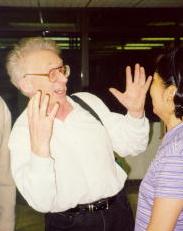
Igor Mel’cuk explains to Sofia the HUGE success of the Meaning-Text Theory. |
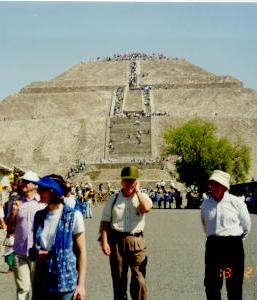
70 m. tall, 2000 years old Pyramid of the Sun. I. Bolshakov and I. Mel’cuk. |
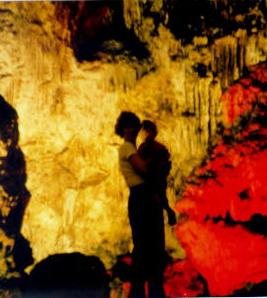
In the cave, the underground kingdom. Mrs. Gelbukh with her son Boris. |
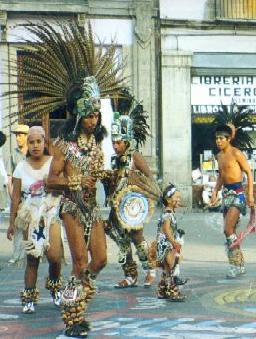
In the streets of Mexico City. Dance of Aztec warriors. Photo by Karine. |
|
Please distribute! Plain text version of CFP, Poster |
|||
This conference is the sixth CICLing event. The past CICLing conferences have been very successful, according to the comments of the participants: Fantastic conference! (Martin Kay, 2004), Everything was just great! Super-hyper-ultra-well done! (Igor Mel'cuk, 2000). We consider the following factors to define our identity:
 Excellent
keynote speakers. We invite the most prominent scientists of the
field to give keynote talks which, unlike at many other confs, are published
in extenso in the Proceedings. They also organize an additional tutorial or
discussion, and usually even participate in the excursions, where you can speak
with them in an informal environment. [Past
participants' opinions]
Excellent
keynote speakers. We invite the most prominent scientists of the
field to give keynote talks which, unlike at many other confs, are published
in extenso in the Proceedings. They also organize an additional tutorial or
discussion, and usually even participate in the excursions, where you can speak
with them in an informal environment. [Past
participants' opinions]
General interest.
The conf covers nearly all topics related to computational linguistics. This
makes it attractive for people from different areas and leads to vivid and
interesting discussions and exchange of opinions.
Informal interaction. It is intended for a small group of
professionals, some 50 participants. This allows for informal and friendly
atmosphere, more resembling a friendly party than an official event. At CICLing
you can pass hours speaking with your favorite famous scientists who you
scarcely could greet in the crowd at large confs.
Excellent excursions. Mexico is a
wonderful country rich in culture, history, and nature. The conference is
intended for people feeling themselves young in their souls, adventurous
explorers in both science and life. Our cultural program brings the
participants to unique marvels of history and nature hidden from the ordinary
tourists.
Relief from frosts. In the middle of February frosts, the
participants from Northern countries can enjoy bright warm sun under the
shadow of palms.
The conf is held at the Center for Computer Research (CIC) of the National Polytechnic Institute (IPN), Mexico. The IPN is one of the largest universities in the world, with over 120,000 students. The CIC is a relatively new school devoted to the cutting edge research in all areas of science related to computers, both in software and hardware. The conf is organized by the Natural Language Processing laboratory of CIC (you can find some our publications at www.Gelbukh.com).

In general, we are interested in whatever helps, will help eventually, or might help computers meaningfully process language data.
The conference is intended to the exchange of opinions between the scientists working in different areas of the growing field of computational linguistics and intelligent text processing. Our idea is to get a general view of the state of art in computational linguistics and its applications.
Areas of interest include, but are not limited by, the following topics, as long as the topic is presented in computer-related or formal description aspects:
Computational linguistics research:
Computational
linguistic theories and formalisms
Representation of
linguistic knowledge
Morphology
Syntax
Semantics
Discourse models
Ambiguity
resolution
Word Sense
Disambiguation
Anaphora
resolution
Text generation
Machine translation
Statistical
methods in computational linguistics
Corpus linguistics
Lexical resources
Intelligent text processing and applications:
Document
classification and search
Information
retrieval
Information
extraction
Text mining
Automatic
summarization
Spell checking
Natural language
interfaces
Naturally, we welcome the works on processing any language, not necessarily English, though major languages are of more general interest. Note: when describing phenomena of languages other than English, please be sure to make your discussion understandable for people not familiar with this language.
You can have a look at the past CICLing-2004, 2003, 2002, 2001, 2000 tables of contents to get an idea of our interests. If you are not sure whether your particular topic is of interest, please do not hesitate to ask us.
Ellen Riloff
(U. Utah)
Formal presentation: to be announced.
Informal discussion/event: to be announced.
Kevin Knight (ISI)
Formal presentation: An Overview of Probabilistic Tree Transducers for Natural Language Processing (with Jonathan Graehl).
Informal discussion/event: to be announced.
Christian Boitet (CLIPS-IMAG, Grenoble)
Formal presentation: tentatively: Message automata for messages with variants, and methods for their translation.
Informal discussion/event: to be announced.
Daniel Marcu (ISI)
Formal presentation: Probabilistic Generative Models for Natural Language Processing and Reasoning.
Informal discussion/event: to be announced.
|
|
Regular paper |
Short papers |
|
Submission deadline |
October 10 |
October 20 |
|
Notification of acceptance |
November 1 |
November 14 |
|
Camera-ready deadline |
November 16 |
November 19 |
|
Conf |
February 13-19 |
|
The camera-ready deadline is firm. We do not guarantee the inclusion of any paper that does not arrive (in camera-ready version) by the deadline indicated above.
Authors of rejected full papers may be given a chance to re-submit their works as short papers well before November 10.
If for some reason you contact us for late submission, please indicate a tentative title of your paper.
Authors of accepted papers: By submitting a paper, at least one author thereby promises, in case of acceptance of the paper, to attend the conf in person to present the paper and to pay the corresponding early registration fee. Unless the current policy changes, the authors of accepted papers will register on-site at the early registration rate. Note: We reserve the right to change this information before November 10; please check our website.
Public (not authors): For early registration information, please contact us before November 10.
The registration will be on site, in cash (US$ or Mexican pesos). All authors will pay early fee. Those of general public who did not arrange with us the payment of the early fee, will pay full fee. Please do not send us any money, unless otherwise is explicitly agreed with us.
Registration fee:
|
|
Professionals |
Students |
Local students |
|
Early (November 10) or authors |
US$ 280 |
US$ 200 |
free entrance |
|
On site |
US$ 320 |
US$ 250 |
On reduced registration fee: A very limited number of reduced registrations may be available. To apply, please contact us and thoroughly justify your application. Eligible for reduced registration can be people from underdeveloped countries in case if their institutions have real difficulties paying the full fee (included: Latin America, Eastern Europe; not included: North America, Western Europe, Japan, South Korea). Authors must apply for reduced registration (clearly indicating the amount of reduction) at the moment of submission of their paper for review; no new applications will be considered for already reviewed papers. Notes: (1) Though all papers are judged by strictly academic criteria, only for borderline cases and only of papers of comparable quality we may give preference to papers with paid fee. (2) Though we will do our best for this not to happen, we cannot guarantee providing the conf material (including the Proceedings) and the conf lunch tickets to participants with reduced fee. Also, in case of lack of seats in the excursion bus we will give preference to fully registered participants.
All accepted full and short papers will be published in a Proceedings volume edited by Springer-Verlag in its Lecture Notes in Computer Science series.
The full papers should not exceed 12 pages, though we encourage you to keep it as short as possible (but not shorter!). If you really need more pages, please contact us.
Short papers should not exceed 4 pages and should, if possible, contain references to Internet sites where more detail on the work can be found. In all other respects the format of the short papers is identical to that of full papers.
Please provide your paper in the form in which it should appear in the book (but without page numbers, running heads, and copyright note). Specifically, please do indicate the authors' names normally (we will take care of hiding them for blind review if needed).
If for some reason you really prefer to hide some information for blind review, please leave the exact space which it occupies. Or, just tell us to eliminate it from the PDF file before sending it to review.
Please strictly follow the format guidelines of Springer LNCS series (you can get the style files here). We cannot guarantee publication of any paper that does not follow these guidelines. Please do not hesitate to ask any questions.
The following are frequent formatting problems:
1. Word users: Do not underline email addresses or URLs, and do not write them in blue font. See also below the notes on bugs in the Word template.
2. All figures, tables, formulas, etc. must be within margins. We will not be able to include papers that do not meet this requirement.
3. All pages must be free of page numbers and running heads.
4. Please do not leave unused space on the pages. Try moving your figures if they cause unused space. Avoid if possible the last page being filled less than to 1/3.
5. No section title should be the last line on the page. Avoid widow and orphan lines.
6. The title and all section titles must be First Letter Capitalized.
7. Figure captions must be below the figure; table captions must be above the table (especially important for TeX users). Both figures and tables should be centered.
8. Do not use colors in figures: they will not be visible in paper book. Especially in Excel drawings, a blue and a red line will look equal, and a yellow line will not be visible at all. In Excel drawings, eliminate the outer frame, and make the background white (not grey), see below.
9. For homogenous look of the book, please format the tables, whenever it does not cause difficulties in understanding the table, with only three thin horizontal lines:
|
Incorrect: |
|
|
|
||||||||||||||||||||||||||||||||||||||||||||||||||||||||||||||||||||||||||||||||||||||||||||||||||||||||||||||||||||||||||||||||||||||||||||||||||||||||||||||||||||||||||||||||||||||||||||||||||||||||||||||||||||||||||||||||||
|
Correct: |
|
|
or |
|
9. If the title of your paper does not fit in one line, please divide it into logical parts (with Shift-Enter in Word, or \\ in TeX):
|
Incorrect: |
A Method of Calculation of Semantic Word |
|
|
|
|
Correct: |
A Method of Calculation |
Note for Word users: the template file sv-lncs.dot currently provided by Springer has the following bugs that you must correct in the text of your paper (if they affect you) in order for it to be published:
1. All centered paragraphs (title, author, address, email, equation, etc.) and some other special paragraphs (table and figure captions) incorrectly have 0.4cm first line indentation, set it to 0 (not indented). This can be done through the menu by changing Format | Paragraph | Indenting | Special to none or (for expert users) by modifying the corresponding style.
2. Bulleted lists seem to have a problem with the bullet character. You can choose another bullet character through the menu Format | Numbering and lists | Bulleted lists | Personalize or (only for expert users!) by modifying the corresponding style.
3. Table captions should be centered; this can be changed through the menu by setting Format | Paragraph | Alignment to centered. Also, table caption style has German language, you might want to set it to English through Tools | Language | Define Language.
Submission
We accept only electronic submissions, which should be properly formatted. See also a note on reduced registration fee.
To submit a paper for review, send us both or any one of the following:
PostScript or PDF file.
With non-English characters, PostScript often works better.
Source file in RTF, DOC,
or LaTeX (in case of LaTeX, PostScript or PDF file is also required).
When sending us the camera-ready paper, please send all of the following:
Source file in LaTeX or RTF (not in DOC). If you use LaTeX,
then also send us all source files necessary for compilation of your paper at
our side, such as EPS pictures and all style files.
(Note that the use of custom style files is strongly discouraged.)
PDF file (if you can
produce it, then send us PostScript file). If you use LaTeX, then also the DVI file.
Copyright form (see
here) by fax (see
contact info) or as a scanned image. In the
Copyright form, indicate the following data:
Conference/book: CICLing-2005, Computational Linguistics and Intelligent Text Processing.
Volume Editor: Alexander Gelbukh.
Please do not send us any hard copies, including the Copyright form.
If you are not sure whether some special symbols are printed correctly at our side, we encourage you to send us scanned images or fax the pages in question, clearly indicating what symbols are to be checked; e.g., you can draw a circle around the symbol(s) in question.
Contact
See email options, fax, and the street address on www.CICLing.org/contact.html.
Short papers
The papers can be submitted either as full papers or as short papers (also to be published in the Proceedings). The authors of short papers will present their works as posters or demos. Whenever possible, a short paper should give references to Internet sites where more detailed info on the work can be found.
The authors of some of the rejected full papers will be encouraged to re-submit their works as short papers. They will be given several days to convert their rejected full paper into a short paper. All short papers (including the re-submitted ones) are subject to a strict reviewing process.
Publication format:All accepted short papers will be published in the Proceedings by Springer-Verlag and thus must be prepared in the required format. In particular, they must have the same sections as a full paper: title, abstract, references. They must follow Springer requirements. The only difference between full and short papers is the length (and the modality of presentation).
Poster/demo format: Short papers will present them as posters and/or demos. You will be given approximately 2 square meters of vertical surface to attach your material. If you have some special requirements, please let us know. Please put your photo in a visible place on your poster (or main page of your demo) for people to easier locate you while you are looking at others' papers. The following common-sense advice improves your presentation:
For a poster
Arrange individual pages vertically, in columns,
from top to bottom. Horizontal arrangement of pages makes the readers to zigzag
when reading your material. Please number pages clearly to
indicate the direction of reading.
Use large font, at least 20 pt, and much larger for
headings. Note that you probably will explain your poster to several or many
people at the same time.
Have detailed and additional material
handy, though do not attach it together with your main material. It is a good
idea to prepare some sufficient number of handouts.
For a demo
Have a working program, not a PowerPoint
presentation (which should constitute your poster instead).
Prepare some plan of your demonstration, including
some examples tested in advance.
Prepare all necessary input files in advance, even
if
small. On the other hand, give the users a chance to test their own
examples and to play with your program’s options and features.
If possible, have handy some floppies or CDs with
your program and documentation to give out to the participants.
Clearly indicate your name and email on these disks. Indicate the
web page where more info can be found.
Presentation: The Poster/Demo presentations can be given during short breaks and after the end of the regular talks. On the first working day of the conf, the Poster/Demo session will be combined with the Welcome party.
Demos
During the same poster/demo sessions, all participants will be able to demonstrate the material related to their talks or posters.
You are encouraged to bring your laptop with your demo. Demo platforms provided by the organizers: PC with Windows 2000/ME/XP (by our choice, no guarantee of some specific version), CD and floppy drives; no significant space on the disk is guaranteed. If you need a specific version of Windows or some another OS or platform please contact the Committee in advance. Similarly, if you need some significant disk space, Internet access, or any special hardware or software.
See submission deadlines in the section Important Dates.
The following schedule and, in particular, the list of excursions and their exact dates is tentative.
There will be four working days and three days of excursions. You can arrive on Monday and leave on Friday if you wish; you will lose two excursions.
February
13, Sunday: Excursion to Teotihuacan: ancient Indian pyramids.
February 14, Monday: Registration. Talks. Welcome party.
February 15, Tuesday: Talks.
February
16, Wednesday: NEW
parallel options: (1) Excursion to Angangueo: Monarch Butterfly wintering site. (2)
UNL workshop. (3) City tour including Anthropological Museum.
February 17, Thursday: Talks.
February 18, Friday: Talks and/or discussions.
(Excursion to the Anthropological Museum is NEW
moved to Wednesday.)
February
19, Saturday: Excursion to Cacahuamilpa and Taxco: very large cave and colonial city.
We will try to arrange for an alternative excursion to the City Center on Wednesday; no guarantee yet.
Note for the participants of past CICLing events held in Mexico: I apologize for repeating the same excursions. I advise you two options: either to stay just from Monday to Friday or to arrive earlier and visit some very interesting places to which we cannot organize an excursion, for example: Tula (2 hours by bus), El Tajin (7 hours); or: arrive to Cancun and visit Chichen-Iza, Uxmal, Palenque, La Venta-Villahermosa traveling to Mexico City (2 nights in bus, 3 days of sightseeing). There are many other good options if you are adventurous enough and can rent a car or pass nights in the buses. Please ask me for more info.
See the list of accepted papers and the program.
Excursions
The preliminary schedule of the excursions can be found in the conference program (when ready).
One of the most exciting things at the conference are excursions to the ancient Indian pyramids and visiting a unique natural phenomenon, the Monarch Butterfly wintering site where you can see millions of beautiful butterflies in the trees and in the air around you. In common opinion of the participants of the previous events the excursions were excellent; you can see their own photos: CICLing-2000, 2001, 2002, 2003, as well as Ted’s site.
Warning: the excursion to the butterflies site is very long and tiresome, especially for elder people. We think it is worth the trouble, but you decide. What is more, the population of the butterflies changes from year to year. We will try to arrange for an alternative informal excursion to the city center at the same time as the excursion to the butterflies site.
NEW Note: Please bring with your (valid) Student / Professor / Teacher ID, and have it with you at all excursions.
Here is the tentative list of excursions:
Excursion to Teotihuacan:
ancient Indian pyramids, 1 hour drive,
much (but slow) walking
Excursion to Angangueo:
Monarch Butterfly wintering site, 4 hours
drive, hard walking up the hill
Excursion to the City
Center; tentative and informal NEW combined with Excursion to the
Anthropological
Museum; in parallel with Butterfly excursion and
UNL workshop (as mutually exclusive options).
Excursion to Cacahuamilpa and Taxco:
great cave and colonial city, 2
hours drive, much (slow) walking. Probably we will also visit the Xochicalco
ancient pyramids.
Note for past CICLing participants: I do understand that repeating the same excursions is a bad idea. On the other hand, these are the best ones, and significantly changing the list would not be fair to the new participants. If you have any specific idea on what you would like to visit, please let us know and we will try to arrange for this.
We are open to any ideas on what other excursions would be interested. Please let us know your ideas.
Welcome party
The reception party will be combined with the Poster and Demo section. We will have some snack, maybe some wine. (No music, no real food, even no tables, sorry. We consider official banquets waste of your valuable time.) You will enjoy the informal atmosphere to speak with each other and with the presenters of the posters and demos. You will also have a chance to show and discuss your own programs (for this, please let us know your software and hardware requirements).
We suggest that it is convenient for the participants to stay in the same hotel, to facilitate informal interaction. Usually our participants form ad-hoc informal companies in the hotel reception to go to some restaurant, walking tours, etc. We will provide free transportation from the recommended hotel to the conf place. Also, we will try to get discounted rates for the conf participants.
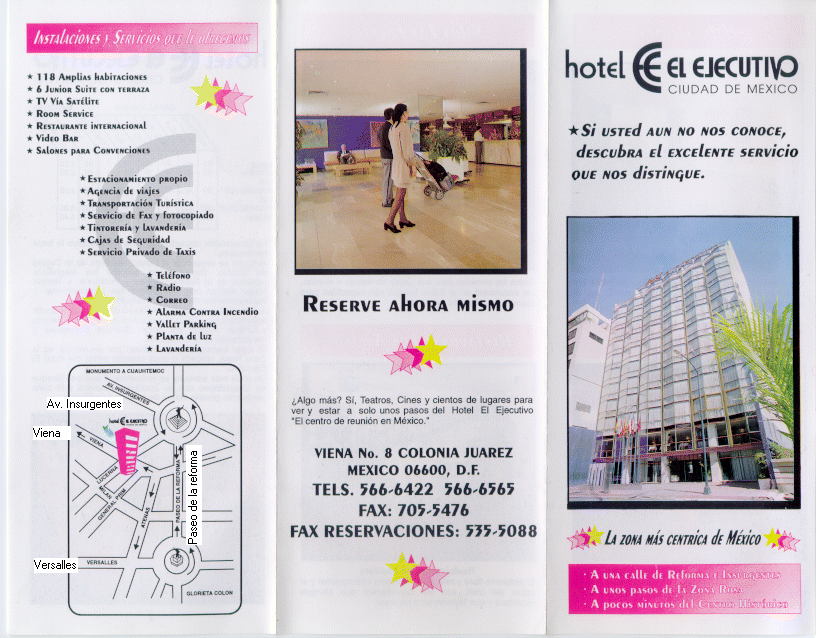
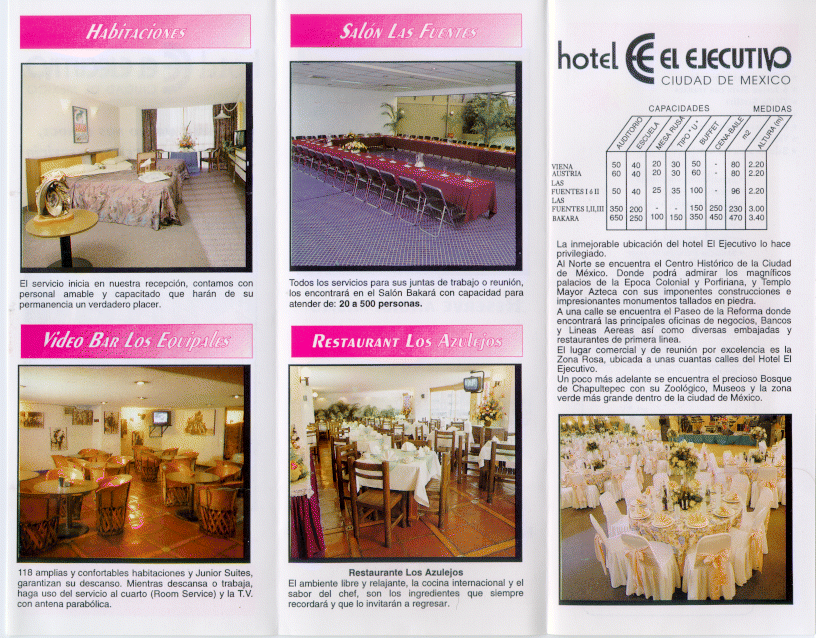
The recommended hotel is **** El Ejecutivo: it is affordable, nice, and located in the central district. Address: Av. Viena # 8, Colonia Juarez, Mexico DF, 06600. Tel. +52 (55) 5566-6422, 5566-6565, fax for reservations +52 (55) 5535-5088. Here you also can see a booklet with some info and a local map, and here the other side of the booklet. See also our local transportation guide.
Rates (approximately; we are negotiating probably better rates):
Single: US$47 per night,
Double: $51 (shared $25/person) per night.
Triple: $57 (shared
$19/person) per night.
NEW Rates confirmed:
| Business class floor
(recommended) (buffet breakfast included; wireless Internet in room) |
Standard floor (breakfast not included, probably free Internet in lobby) |
|||
| CICLing | General public | CICLing | General public | |
| single | MX$ 600 = US$ 54 approx. | MX$ 800 = US$ 72 approx. | MX$ 520 = US$ 47 approx. | MX$ 695 = US$ 62 approx. |
| double | MX$ 635 = US$ 57 approx. | MX$ 850 = US$ 76 approx. | MX$ 560 = US$ 50 approx. | MX$ 745 = US$ 67 approx. |
You do not need to reserve your room; we will do it for you. Please send us a message well in advance indicating:
your name,
dates: from what day to what day you will stay in
the hotel,
type of the room (single, double, triple, JR suite,
Master suite),
the number of persons,
whether you prefer to share the room with other
persons (e.g., you can indicate a shared triple room for one person; we will
try to find someone to share the room with you, though no guarantee!),
for shared rooms: male or female,
any other indications (e.g., with whom you would
prefer to share the room, etc.).
Here you can find the following information:
How to get to the
recommended hotel,
How to get to CIC, the conf
place,
Useful local information: currency
and credit cards, transportation, phones, food, museums, security.
Program Committee
Boitet, Christian, France
Bolshakov, Igor, Mexico
Calzolari, Nicoletta, Italy
Campbell, Nick, Japan
Carroll, John, UK
Cristea, Dan, Romania
Gelbukh, Alexander (chair), Mexico
Han, SangYong, Korea
Harada, Yasunari, Japan
Hovy, Eduard, USA
Kharrat, Alma, USA
Kilgarriff, Adam, UK
Kittredge, Richard, USA / Canada
Kuebler, Sandra, Germany
Lopez-Lopez, Aurelio, Mexico
Maegaard, Bente, Denmark
Martin-Vide, Carlos, Spain
Mel’cuk, Igor, Canada
Metais, Elisabeth, France
Mihalcea, Rada, USA/Romania
Mitkov, Ruslan, UK
Murata, Masaki, Japan
Nevzorova, Olga, Russia
Nirenburg, Sergei, USA
Palomar, Manuel, Spain
Pedersen, Ted, USA
Pekar, Viktor, UK
Piperidis, Stelios, Greece
Pustejovsky, James, USA
Ren, Fuji, Japan
Sag, Ivan, USA
Sharoff, Serge, UK
Sidorov, Grigori, Mexico
Sun Maosong, China
Tait, John, UK
Trujillo, Arturo, UK
T’sou Ka-yin, Benjamin, Hong Kong
Van Guilder, Linda, USA
Verspoor, Karin, USA / The Netherlands
Vilares Ferro, Manuel, Spain
Wilks, Yorick, UK
Best Paper Award Selection Working Group
Gelbukh, Alexander (coordinator)
Hovy, Eduard
Mihalcea, Rada
Pedersen, Ted
Wiks, Yorick
Organizing committee
Arreola Ceja, Arturo
Ayala, Juan Antonio
Calvo Castro, Hiram
Cu Tinoco, José Ángel
García Araoz, Ignacio
Gelbukh, Alexander (chair)
Muñoz Porras, Valentina
Haro Martínez, Martín
Sandoval Reyes, Alejandro
Torres Frausto, Raquel
Return to the top of the page.